
Longest half-life
Bismuth-209 is radioactive, decaying like any other unstable atom over time and emitting radiation as it goes. But its rate of alpha decay is slower than any other.
Learn widely
Bismuth-209 is radioactive, decaying like any other unstable atom over time and emitting radiation as it goes. But its rate of alpha decay is slower than any other.
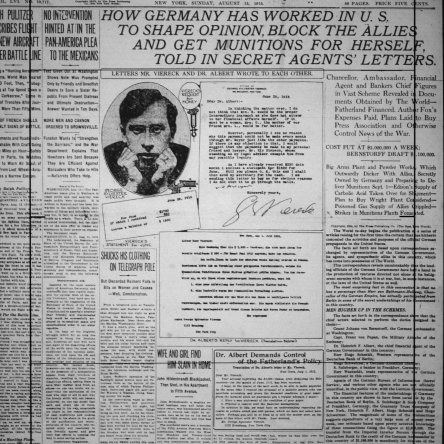
In World War I, phenol was a key ingredient in aspirin, explosives, and phonograph records. German agents secretly redirected Thomas Edison’s excess phenol supply to prevent it being used for British bombs.

Radiocarbon dating only works on organic material, so how do you accurately measure the last time rocks and sediment saw sunlight? Luminescence dating.

In many parts of the world it is traditional to celebrate by firing guns in the air. But what happens to the bullets?
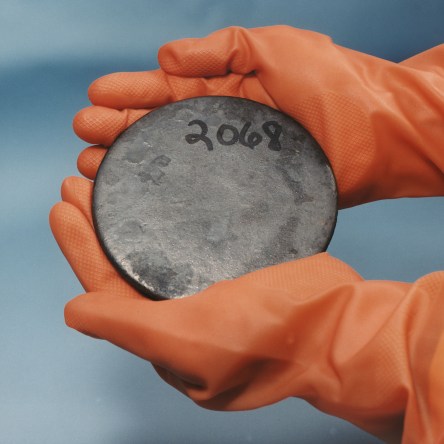
Enrico Fermi switched on the first human-made nuclear reactor in 1942, but the first natural nuclear reactor on Earth occurred 1.7 billion years earlier.

For more than 1700 years, mithridate and theriac were Europe’s ultimate medicines. A concoction of up to sixty-four ingredients – including cinnamon, turpentine, and poppy – they were supposed to neutralise any poison or plague.

Aircraft can punch cloud holes that are much larger than the plane itself.

The 1952 Miller-Urey experiment synthesised amino acids essential to life from inorganic materials. The experiment’s vials were then sealed, and when scientists re-examined them 55 years later they were surprised at what was inside.

If you want to build a Geiger counter you need to first find a shipwreck from before 1945.
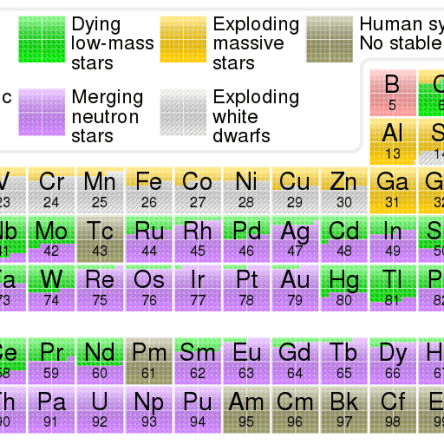
Where do the elements come from? Nuclear astrophysics proposes several origins, depending on the element: the Big Bang, dying and exploding stars, and cosmic rays.
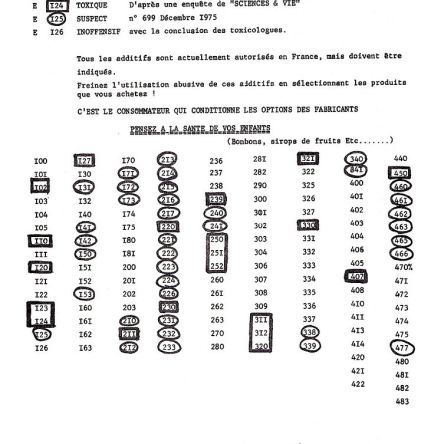
Beginning in 1976 a pseudoscientific pamphlet spread like wildfire across Europe, stating that many common food additives caused cancer – including cellulose and citric acid.

In nuclear physics terminology, first you need to hit the barn, and next you need to wait for 50 to 100 shakes. And then the bomb blows up.

Old people smell different – and a few studies have posited a chemical basis for that difference.
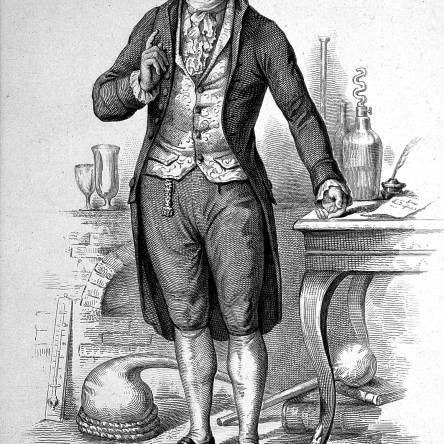
Antoine Lavoisier explained how combustion uses oxygen with a very clever experiment. Later, he lost his head.
French magician Ivan Chabert was famous in the 19th century CE for his feats with heat: sitting in an oven, putting melted lead in his mouth, and bathing his feet in molten metal.

According to special relativity, something can happen both before and after something else – depending on the observer’s frame of reference.
 The Generalist Academy