
Truly large numbers
Imagine an experiment which only works one time in a thousand. If you do that experiment a thousand times, what’s the probability that it works at least once? Counter-intuitively, it’s 63.2%.
Learn widely
Imagine an experiment which only works one time in a thousand. If you do that experiment a thousand times, what’s the probability that it works at least once? Counter-intuitively, it’s 63.2%.

There is a courtyard gallery in the Palazzo Spada in Rome that is designed to fool the eye. It looks like it should be 37 metres long, but in fact it’s only 8 metres in total.

Worshippers of many different religious use beads on a string to count prayers: Catholic Christians, Muslims, Buddhists, Sikhs, Hindus, and Baháʼís.

The inventor of the pie chart and the bar chart was also a secret agent who helped collapse the French revolutionary government’s economy through an elaborate counterfeiting operation.

The P vs. NP problem is perhaps the biggest unsolved question in computer science – but an answer would have profound implications for mathematics, cryptography, cancer research, nurse roster scheduling, and sudoku. [2 of 2]
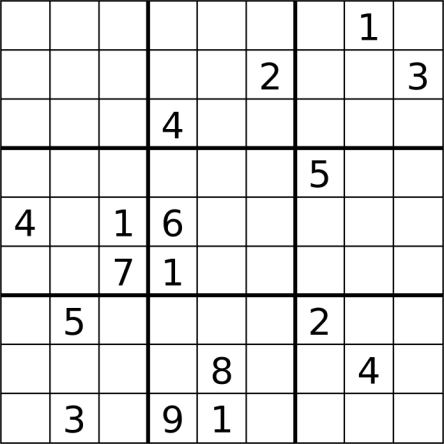
The P vs. NP problem is perhaps the biggest unsolved question in computer science – but an answer would have profound implications for mathematics, cryptography, cancer research, nurse roster scheduling, and sudoku. [1 of 2]
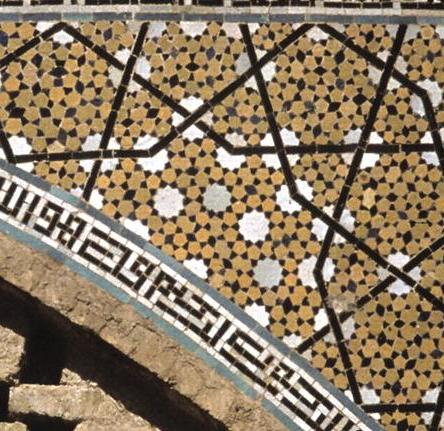
The Darb-e Imam shrine in Iran contains an early and exciting example of non-periodic tiling that was only mathematically appreciated five hundred years later.

Is Christmas Day the twelfth day of Christmas or the first? And why does it cost US$170,298.03?
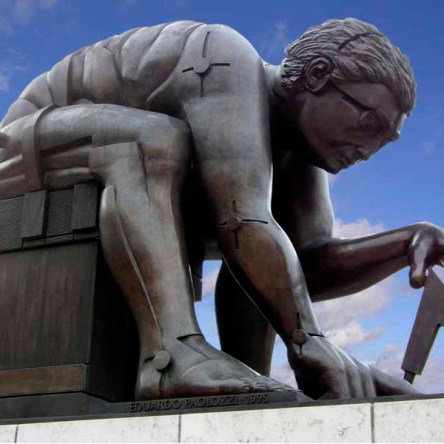
This is the 300th regular post on this site. Time to talk about simultaneous scientific discovery, starring Edison, Newton, Darwin, and many many others.

What’s the largest number? If you said the googolplex, you’re off… by a lot. A lot.
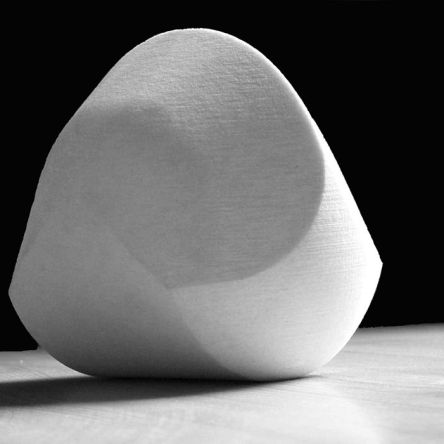
The Gömböc is an object with a very specific trick: no matter how much you push it or tip it over, it will always return to the same position.
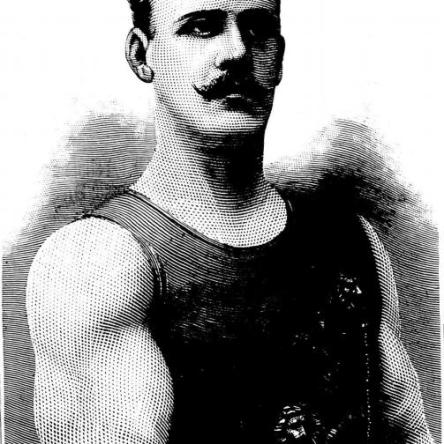
Mathematical proofs can be established by various means, including induction, contradiction, construction, and exhaustion. My favourite is proof by intimidation.

If you’re a gambling man, you better believe in God. So suggested Pascal’s wager, one of the first applications of decision theory to philosophy.

What is the smallest boring number? There’s no such thing, because the title of smallest boring number automatically makes that number interesting.
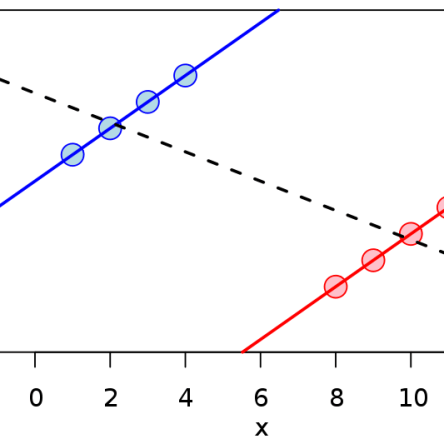
Statistics are tricky. Consider this: of two treatments for kidney stones, Treatment A is better on average for large stones and small stones. But consider all stones together and Treatment B is better. This is Simpson’s paradox.
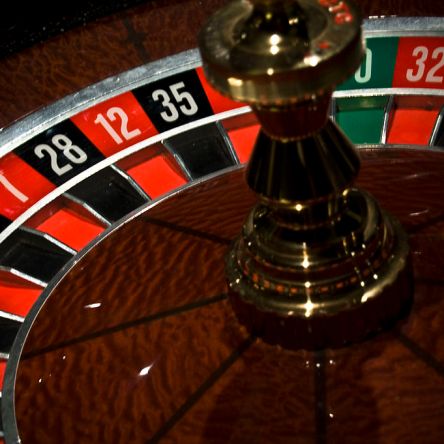
The gambler’s fallacy is the belief that random independent events “even out” over time. In Monaco in August 1913, this belief cost casino gamblers millions because of an extraordinary streak at a roulette table.
 The Generalist Academy