
Tongan wood king
For three years in the middle of the 12th century, the Tu’i Tonga Empire was ruled by a piece of wood.
Learn widely
500 CE until 1500 CE
For three years in the middle of the 12th century, the Tu’i Tonga Empire was ruled by a piece of wood.

A tiny yolkless egg shows up in your henhouse. Today, we know this to be a chicken’s first training egg. In the 12th century? It came from a rooster, and you better throw it over your house or it will be born a monster.
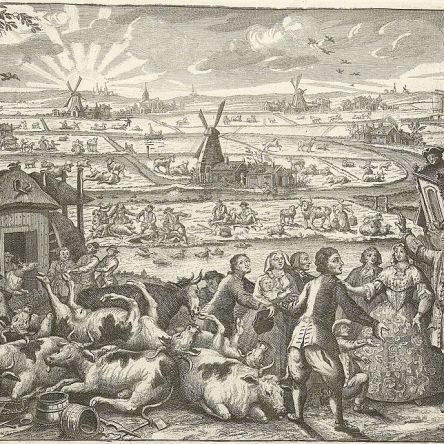
Most people know that smallpox was the first disease that we have completely eradicated in the wild. But what was the second, and what does it have to do with Egyptian plagues, measles, and cattle?
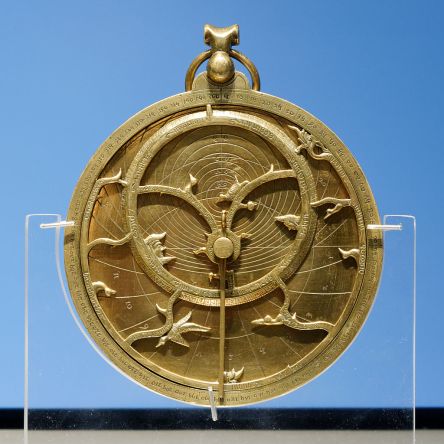
Geoffrey Chaucer is best known as the author of The Canterbury Tales, one of the most important works of early English literature. I guess that didn’t pay the bills, because he also wrote one of the first English technical manuals.

Around 1311 CE, the mansa (sultan) of the Mali Empire sent hundreds of ships to find the other side of the Atlantic Ocean. They were lost at sea, so on the next expedition he sailed into the Atlantic himself. He was never seen again.
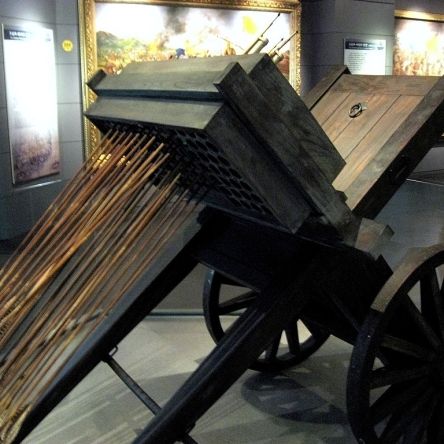
We think of rocket launchers as a modern invention, but the Koreans were using them four hundred years ago. The hwacha could fire two hundred rockets at once, blowing up enemies more than a hundred metres away.

In 1492, the Columbus expedition sighted and visited land. We’re still not sure which island in the Caribbean he landed on, but did he see a UFO the night before?

The hand is a flexible and convenient mnemonic device. The knuckle mnemonic tells us the number of days in a month, but a musical mnemomic called the Guidonian hand has been around for eight hundred years.
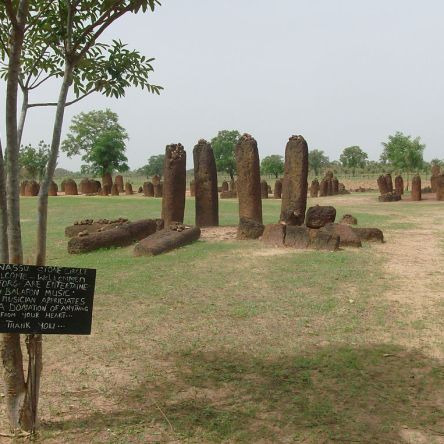
For most Westerners, stone circles begin and end with Stonehenge. But there are examples around the world, in Australia, Asia, and Africa too. In Senegal and The Gambia, there are around two thousand of these megalithic monuments.

Prior to standardization, the measurement of length designated “the foot” was a different size depending on which country or region you were in. Notable variants included the Prussian foot, the Rijnland foot (which became the Cape foot used in South Africa), and the Chinese mathematician’s foot.
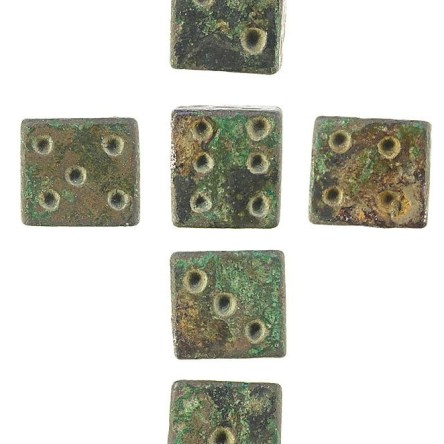
Dice chess is a Medieval variant of chess in which you roll dice to determine which pieces you are allowed to move.

The Great Wall of Gorgan in Iran is 195km long, making it the second-longest wall in history behind the Great Wall of China. Built by the Sasanian Empire in the 5th or 6th Century to keep out (probably) the White Huns, medieval tradition also connects it with Alexander the Great and his legendary Caspian Gates.

Traditionally, the bodily remains of saints are venerated as relics. But Jesus Christ ascended into heaven, which means no bodily remains… er, remain. Except for one.
 The Generalist Academy